spacer

Exterior House Painting in Rotorua

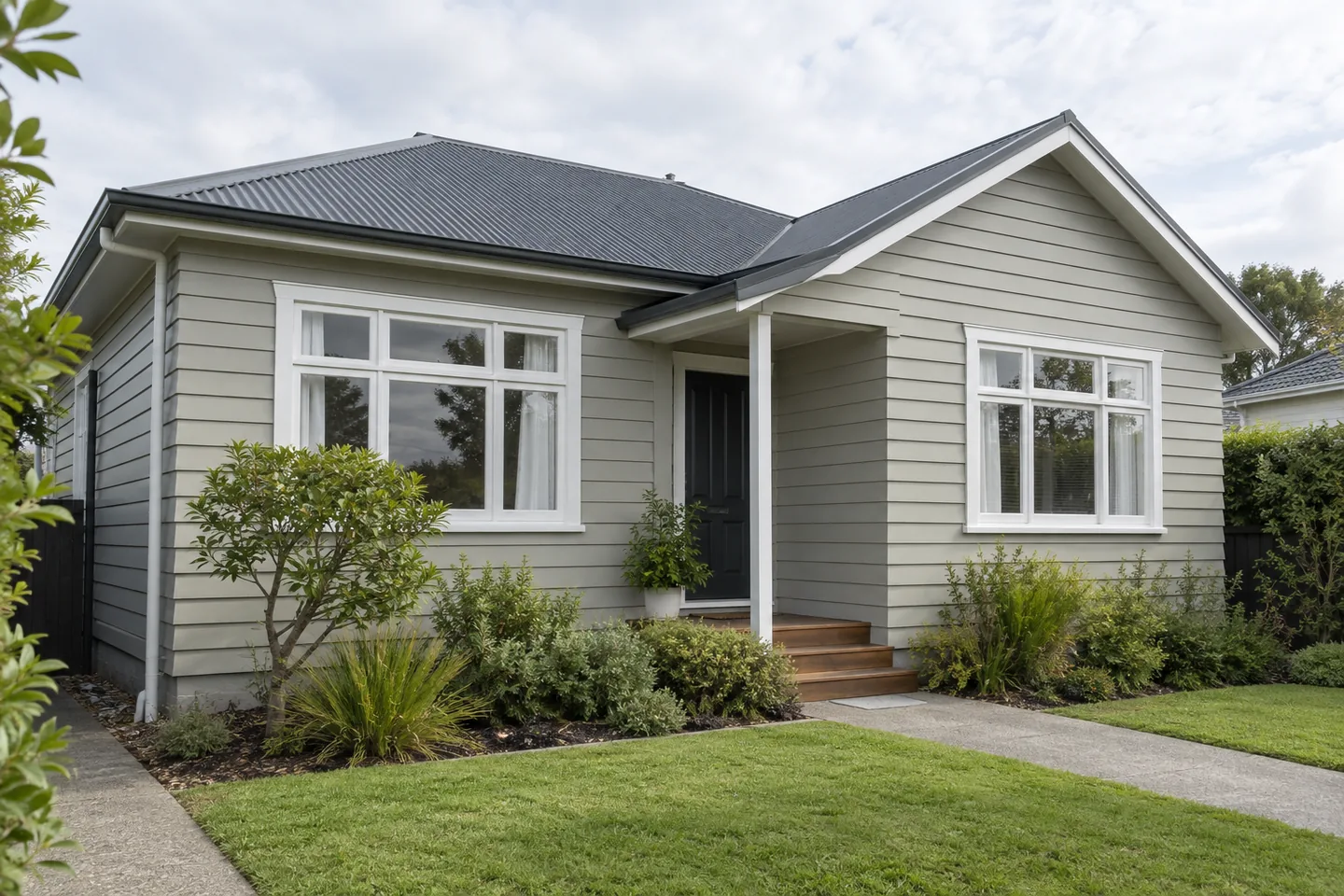
Grey weatherboard house with white window trim and a landscaped front garden

The outside of a Rotorua house works hard. North and west walls take strong summer sun, shaded walls stay damp and grow moss, winter brings frosty mornings and heavy dew, and some suburbs have geothermal air as well. We paint weatherboard, plaster, brick and fibre-cement homes across Rotorua and the Lakes District, and most of an exterior job is the preparation: washing and treating growth, repairs, priming bare timber and metal, then the specified coats. Every job starts with a free on-site assessment and a written scope.

CUSTOMER REVIEWS
REAL PROJECTS
See preparation and finished work
LOCAL TEAM
Rotorua based
WRITTEN SCOPE
Preparation and coats in your quote

Exterior surfaces we paint in Rotorua

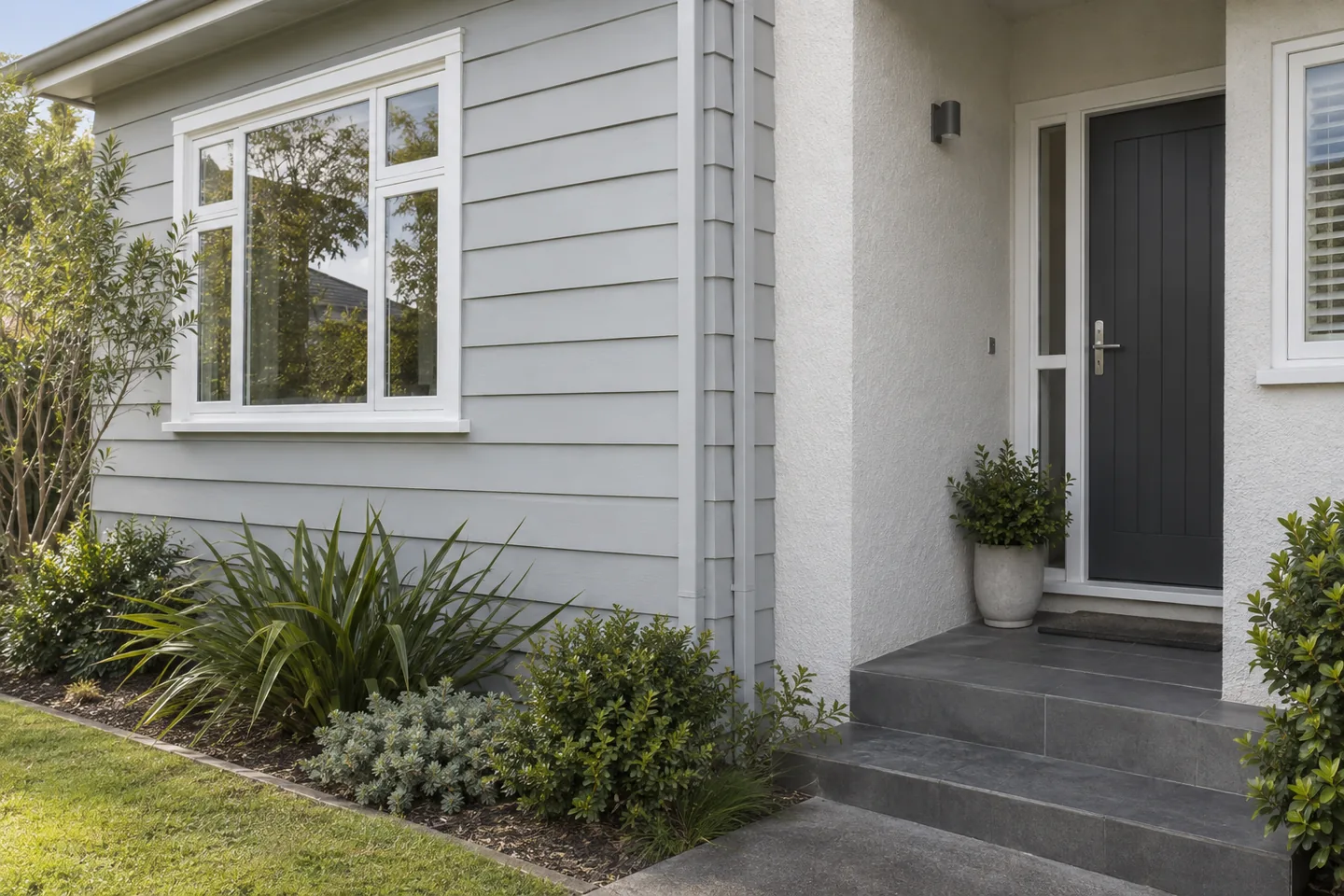
Painted weatherboards, textured plaster, white window trim and a front entrance

Each cladding needs its own preparation, so the scope starts with what your walls are made of and how each side of the house has weathered.

  • Timber and fibre-cement weatherboards
  • Plaster, stucco and texture-coated cladding
  • Brick and block
  • Fascia, barge boards and soffits
  • Window and door joinery, including front doors
  • Garage doors, spouting and downpipes
  • Fences and decks, painted or stained

If the roof is due as well, plan the two together. Roof painting and restoration usually comes before the walls, so wash-down and overspray land on surfaces that are still to be painted.

From assessment to finish

How an exterior repaint runs

Most of the work is done before any colour goes on. The written scope sets out each stage for your house.

Assessment and written scope

We walk every side of the house, check the coating, joinery and access, and set out the preparation, primers and coats in writing.

Washing and treating growth

Moss, mould and lichen are treated and washed off, and the walls are left to dry. Wash water is kept out of stormwater drains.

Repairs and preparation

Loose paint is scraped and sanded back, and agreed repairs to boards, sills and fixings are made before any coating.

Priming and gap sealing

Bare timber and metal are primed. Gaps that let water in are sealed, while drainage gaps are left open.

Care around your property

Windows, paths, decks and gardens are covered, and access is planned for your section before work starts.

Coats and final walk-around

The specified coats go on when the surface and weather allow, and we walk the finished work with you.

Care around your property during exterior painting

Good exterior work protects everything around the surface being painted.

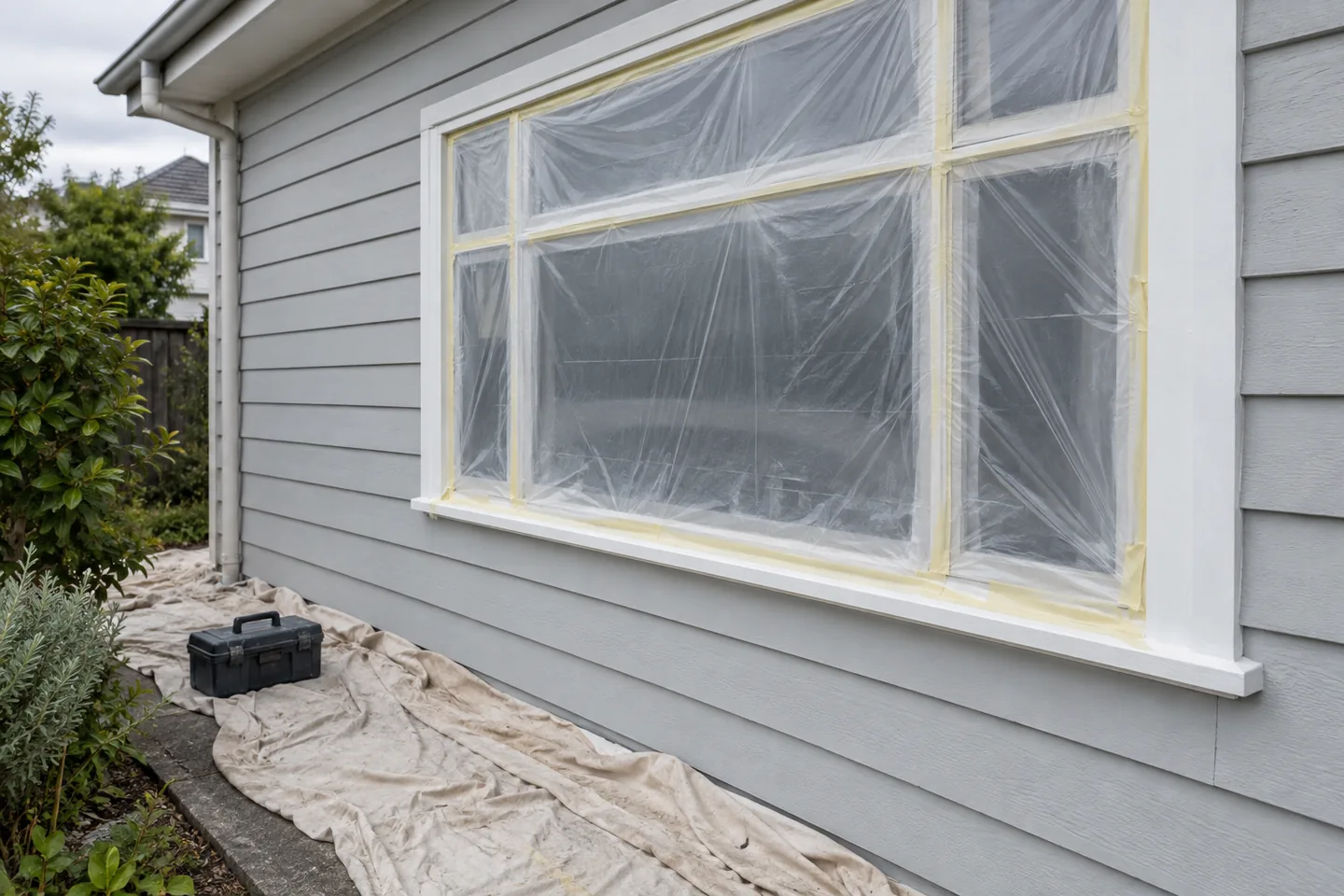
Window protected with masking film and a canvas drop cloth before exterior painting
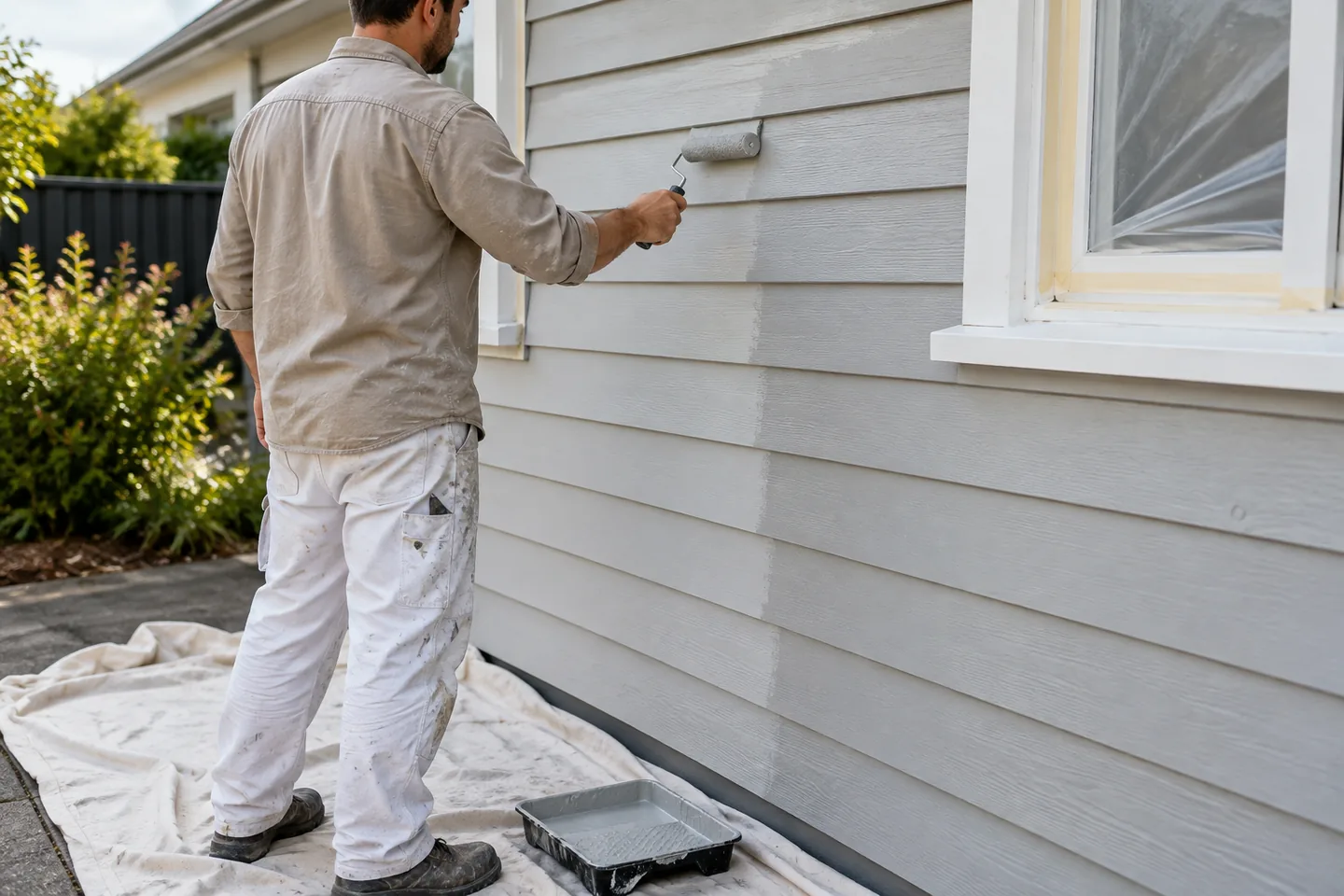
Painter applying grey paint to timber weatherboards beside a masked window

Protection first, then paint

On the separate steep Rotorua roof restoration linked below, the dormer windows, walls and surrounding garden were fully masked before spraying, so the coating could go on cleanly without damage to the property. The standalone garage roof was restored to match in Flaxpod, and the garage door was prepped and given two coats.
What Rotorua conditions do to exterior paint

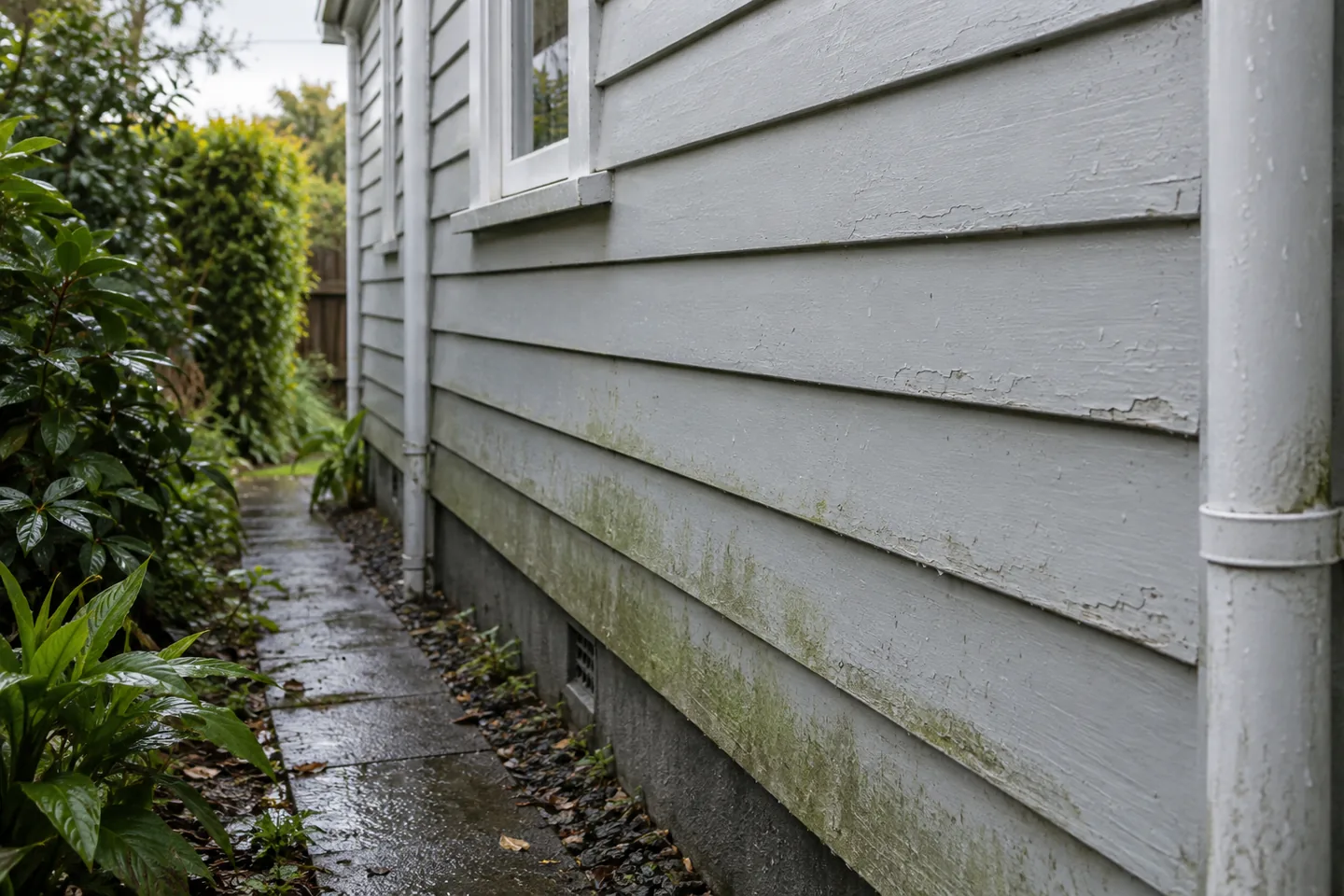
Weathered paint and green surface growth on shaded exterior weatherboards

Most exterior paint failures start at edges, joints and bare timber rather than in the middle of a board, and Rotorua adds a few local pressures.

  • Sun on the north and west walls. Coatings chalk and lose their sheen there first.
  • Damp on the shaded side. South walls and walls under trees hold moisture and grow moss, mould and lichen, which must be treated before painting.
  • Frosty mornings and heavy dew. Many exterior paints list about 10°C as a minimum, and the film needs to set before evening dew.
  • Geothermal air. In some parts of the city, hydrogen sulphide tarnishes metals and can discolour some finishes, so fittings and coatings are checked at the assessment.
  • Lake and hillside sections. Wind-driven rain, reflected light and sloping ground change both the preparation and the access.

On two-storey houses, steep roofs and sloping sections, access is planned at the assessment. Scaffolding and edge protection are assessed separately from the painting.

Older homes: test before anyone sands

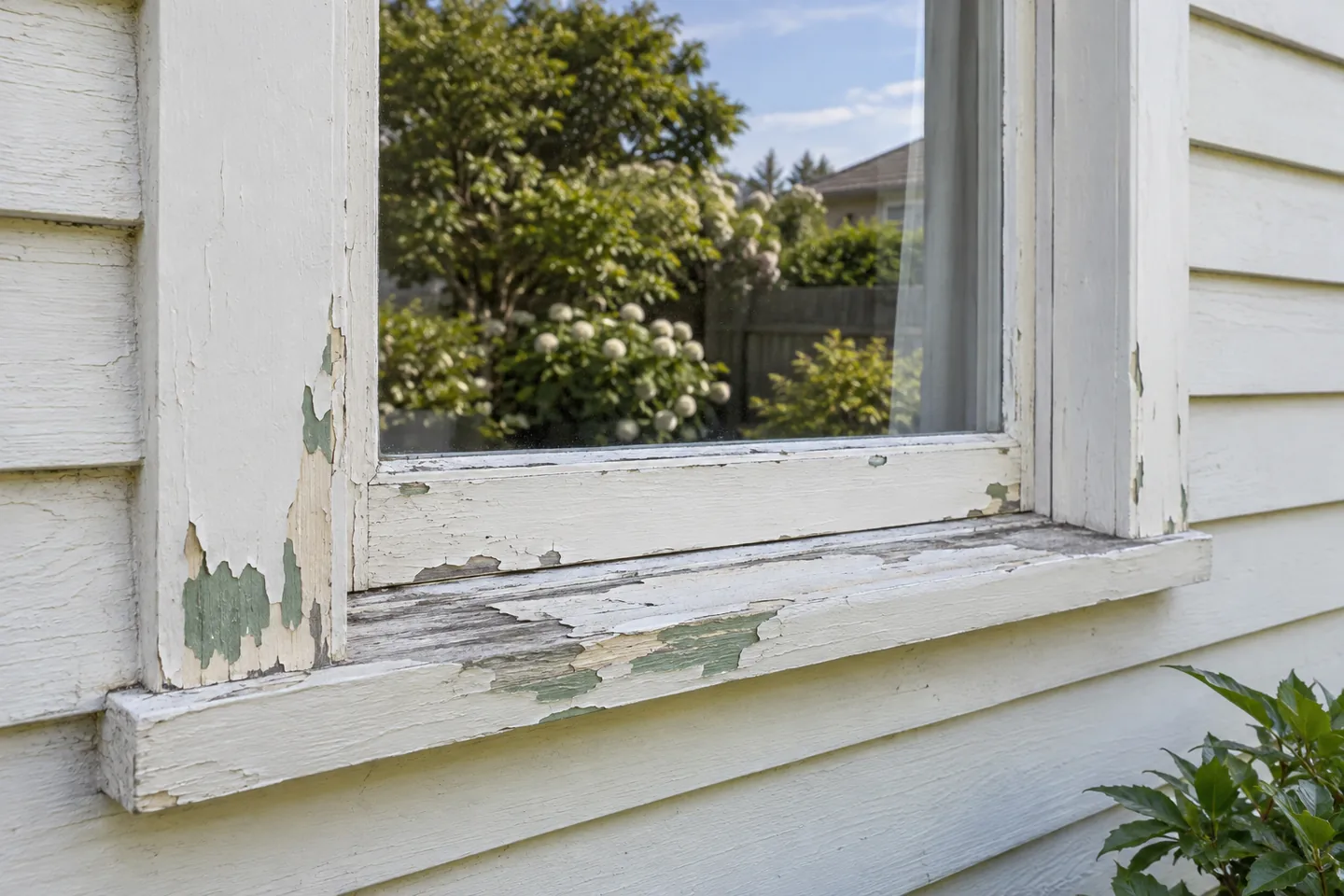
Flaking older paint on timber window joinery and an exterior sill

Houses built before the 1980s can have lead-based paint in the older layers, and WorkSafe advises that buildings built or renovated between 1940 and 2000 may contain asbestos. Suspect paint and sheet cladding are tested before any sanding, scraping or water blasting.

A positive result changes the method, with wet preparation, containment and a proper clean-up, rather than stopping the job. WorkSafe explains the risks in its guidance on lead-based paint and asbestos.

What affects the cost of exterior painting?

Wall area is only part of the quote. The assessment tells us what preparation, repairs and access your house needs.

Size, height and access
A two-storey house, a sloping section or long runs of soffit may need scaffolding or edge protection, which is assessed separately from the painting.
Surface and condition
Weatherboard, plaster, brick and fibre-cement need different preparation, and repairs, stripping or lead and asbestos work add to the scope.
Colour and coats
A colour change or bare surfaces can need a primer and extra coats. A free colour consultation is included with every project.

For an indicative range, use the painting cost calculator. A fixed quote follows the on-site assessment.

Having the roof done as well? Read the Rotorua roof painting quote checklist.


Exterior painting questions from Rotorua homeowners

Late spring to early autumn gives the longest drying days, but the surface matters more than the month. Many exterior acrylics list about 10°C as a minimum on their data sheets, and the paint needs to set before the evening dew, so work starts once walls have dried and finishes early in the afternoon. Winter is a good time to have the house assessed and the quote settled.

Growth is treated and washed off before any preparation starts, then the walls are left to dry. Shaded south walls and walls under trees usually need the most attention. Wash water and treatment runoff are kept out of stormwater drains, which in Rotorua run to streams and lakes untreated.

Yes. Each surface needs its own preparation. Cracks in plaster and monolithic cladding are assessed before anything is coated, brick needs any efflorescence and its moisture source dealt with first, and fibre-cement needs its joints and edges checked. Older sheet claddings can contain asbestos, so suspect sheets are tested before they are sanded or water blasted.

It can. Older layers of paint may contain lead, so the coating is tested before any sanding or scraping. A positive result changes the method, with wet preparation, containment and a proper clean-up, rather than stopping the job.

It depends on the size of the house, how much preparation and repair it needs, access and the weather. Wet days and heavy dew stop exterior work, so any programme needs weather days built in. Your written scope sets out the stages so you know what happens in what order.

Usually not, as long as there is access around the house, an outdoor tap and power. It helps to move pot plants, outdoor furniture and anything fixed to the walls before work starts, and to plan for pets and cars. We talk through access at the assessment.

It depends on the size and height of the house, access, the surface and its condition, repairs, the number of coats and any colour change. The painting cost calculator gives an indicative range, and a fixed quote follows an on-site assessment. Scaffolding, edge protection, major repairs, stripping, and lead or asbestos work are assessed separately.

Yes. The on-site assessment and written quote are free and there is no obligation, and a free colour consultation is included with every project.

Planning an exterior repaint? Call 0800 866 272 (weekdays, 9 am to 5 pm) or use the form below to arrange a free on-site assessment.

Discuss your painting project

Tell us what you have in mind. We will discuss the work with you and arrange a suitable time to assess it.

A phone number is required so we can contact you about your enquiry.

No obligation. Prefer to talk? Call 0800 866 272.

We use these details to respond to your enquiry.

Other branches: Looking for painters outside Rotorua?

Hamilton Branch Tauranga Branch Auckland Branch Other branches
Call 0800 866 272 Discuss your project